
Your first tattoo should feel like a deliberate choice, not an impulse. The design will be on your skin for the rest of your life, the studio charges for the artist’s time and design work, and your skin has to go through a small healing process. None of this is difficult, as long as you plan ahead. This checklist walks you through every step—from “I think I want a tattoo” to “I’m out of the chair and feeling great” . Most of this applies to a first tattoo anywhere; market-specific points (age restrictions, VAT, local payment methods) are marked as BE / NL / FR where they differ.
Decide what you want — Before you choose an artist
Looking for an artist before you know what you want is a classic beginner’s mistake. Two questions will get you a long way:
What style? Fine line, traditional, neo-traditional, blackwork, realism, watercolor, ornamental, lettering, illustrative, Japanese, geometric—each style has its own visual rules and its own specialists. A tattoo is only as good as the match between idea, style, and artist.
What size and where? About thumb-, fist-, palm-, or hand-sized. The wrist, forearm, calf, and shoulder hurt less and heal faster than the ribs, sternum, hands, feet, or the back of the knee. Visible placement (hands, neck) is permanent in a way that the rest of your body isn’t—it affects employment, travel, and first impressions for the rest of your life.
Save references. Pinterest boards and screenshots help, but try to articulate what you like about the references—the linework, the negative space, the color palette, the composition—not just “I want exactly this piece.”
Choose the right artist
The biggest factor in how a tattoo looks is the artist. Not the studio’s name, not the price, not the city.
Match style to specialist. Look at portfolios for the style you’ve chosen. A great realism artist is rarely a great traditional artist; their hands are tuned differently.
Look for healed photos. Fresh tattoos always look sharp. Healed photos after 6 months tell you the truth about the artist’s depth control and pigment choices.
Read reviews. Average scores indicate reliability; individual reviews show what the experience is really like.
Check hygiene. Single-use needles, sealed cartridges, fresh gloves changed mid-session, an autoclave on-site. If a studio looks makeshift, leave.
Trust your instincts during the consultation. A good artist will ask questions about your idea, suggest adjustments, and won’t do anything they think will age poorly. A bad artist takes the deposit and stays silent.
On TattooPointer, you can filter artists by style, theme, body area, and city, then click through to view healed work, reviews, and certifications on each profile. The Concierge questionnaire matches you with artists based on your answers, if you’d rather not search manually.
Send a booking request that won’t be ignored
Artists receive dozens of requests per week. The requests that get a response are those that respect the artist’s time.
Be specific. Style, format, placement, references, rough budget, scheduling window. The booking wizard collects all this information in a structured way so the artist sees everything at a glance.
Include reference images—not as “copy this,” but as visual anchors for the conversation.
Mention health conditions. Skin conditions, blood thinners, recent surgeries, pregnancy, allergies. Most are manageable; surprises on the day of the event are not.
Don’t negotiate price upfront. Pricing comes only after agreement on the design. Asking “How much does it cost?” before the artist has seen the briefing makes you seem like a time-waster.
Understand the deposit
Virtually every working artist asks for a deposit. It reserves your time slot, compensates for the design work done before you sit down, and prevents no-shows from driving up prices for everyone.
Where you pay: directly to the artist today — TattooPointer does not yet process deposit payments. Most artists handle this via bank transfer or in the studio on the day of the appointment. They’ll let you know via the in-app chat which method they prefer after they accept your booking. Advance payment on the platform (Bancontact / iDEAL / Carte Bancaire) is on the roadmap.
What it covers: advances are usually deducted from the final session price.
Refund policy: determined by the artist, agreed upon with you before you pay. The industry standard is non-refundable but transferable to a new date provided timely notice is given. Confirm in writing (in the chat) before you transfer any funds.
Penalty for no-show: usually a full loss of payment and possibly blacklisting. Read the rules; respect them.
The health declaration is mandatory
You cannot legally be tattooed in BE, NL, or FR without signing a health consent declaration. The form covers your age, identity, skin and medical conditions, allergies, medications, and acknowledgement of the risks (infection, scarring, allergic reaction, ink permanence).
On TattooPointer, the consent is digital. You'll receive a link before the appointment, fill it out from your phone, sign with a fingertip or stylus, and the form is generated as a PDF stored on file. In the Netherlands, signed consent has to legally be retained by the studio for 10 years. The platform handles that automatically.
Minimum age:
Belgium: 16 with a parent present and consenting; 18 unaccompanied.
Netherlands: 16 (under 16 needs a parent or guardian to sign).
France: 18 generally; under 18 with parental consent.
The day of show: show up right
A few small things make the experience massively better.
Eat a real meal 1–2 hours before. Low blood sugar plus a needle equals fainting. Bring snacks and a sugary drink for long sessions.
Hydrate the day before. Hydrated skin takes ink better.
Don't drink alcohol for at least 24 hours before. It thins your blood, makes you bleed more, and dilutes the ink.
Sleep. Tired skin is jumpy skin.
Wear something practical. Easy access to the area being tattooed; old clothes you don't mind getting ink on.
Arrive 10 minutes early. Late arrivals (15+ minutes is the industry threshold) typically forfeit their deposit and have to rebook.
Bring your ID. Studios are required to verify your age.
Leave the entourage at home unless your artist explicitly approved a guest. Studios are small and sterile.
The session itself
Bring headphones, a podcast, an audiobook, or a movie you've already seen. Most artists are happy to chat; some prefer to focus. Read the room.
Pain is honest. It is not torture. Most placements settle into a manageable burn after the first 15–20 minutes as your body releases endorphins. Ribs, sternum, behind the knee, inner bicep, and feet are the rough zones.
Ask for breaks if you need them. Bathroom, water, food. The artist would rather pause than have you faint.
Don't move. Even a centimeter of flinch can ruin a fine line. If something hurts more than you can hold still through, say so.
Tip if you can. Not legally required in any of our markets, but customary and appreciated. 10–15% if you're happy with the work.
Aftercare start the moment you leave the chair
Your artist will wrap the tattoo in either a bandage or a second-skin film. Listen to their specific instructions — they used specific products and know your skin.
A general first-week routine:
Keep the wrap on as instructed (a few hours for plastic; up to 5 days for second skin).
After removal, wash gently with lukewarm water and fragrance-free soap. Pat dry with a paper towel.
Apply a thin layer of fragrance-free aftercare balm 2–3 times a day. More is not better — over-moisturising slows healing.
No pools, hot tubs, baths, or sea for at least 2–3 weeks.
No direct sun, no tanning beds, no gym sessions that sweat into the area for 3–7 days.
Don't pick. Don't peel. Don't scratch. Your tattoo will itch around days 4–7. Slap, don't scratch.
Surface healing takes 2–4 weeks. Full settle takes 4–6 weeks. Deep dermal healing takes up to 3 months. Don't judge the final result until month two.
For long-term care: SPF 50, every time the tattoo sees sun, forever. UV is the single biggest factor in fade.
Touch-ups and the long game
Most artists offer a free touch-up in the first 3–6 months for spots that didn't take ink as expected — fingers, hands, feet, and elbows are common touch-up zones. Wait until the tattoo is fully healed (6–8 weeks minimum) before booking the touch-up.
After that, your tattoo is a long-term relationship. Moisturise, protect from sun, and it'll hold up beautifully for decades.
Ready when you are
A first tattoo is exciting because it's permanent. The same permanence is why preparation pays off — the difference between a piece you love at year ten and a piece you regret at month two is almost entirely upstream of the chair.
Browse artists on TattooPointer by style, by city, or by theme. Use the Concierge if you want a guided match. When you're ready, the booking wizard handles the rest — the request, the proposed dates, the deposit, the consent, the chat, the timeline. All in one place. All in your language. All before your first needle touches your skin.
handige links:
Related articles
All articles →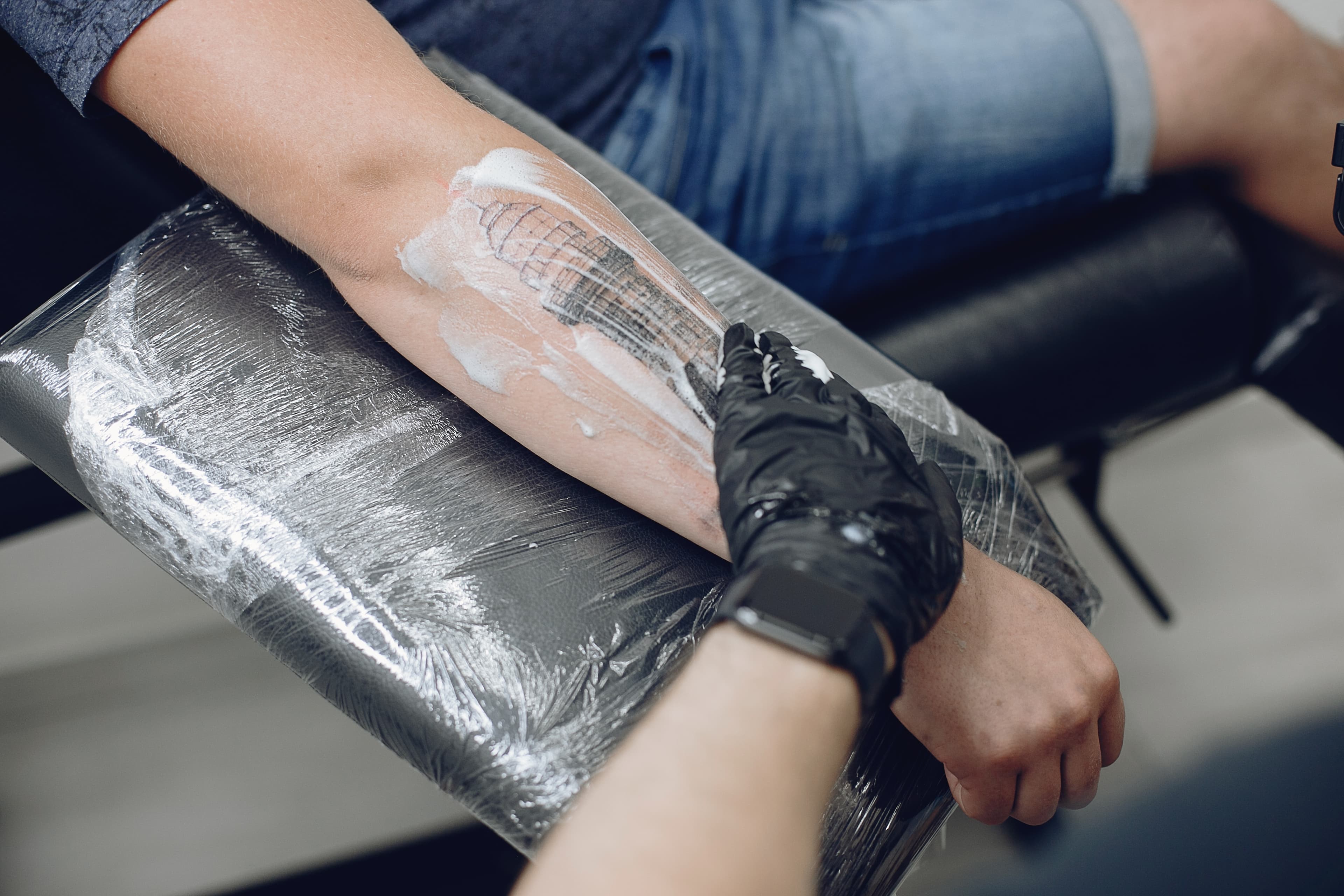
Tattoo aftercare day by day
The quality of your tattoo at year five depends almost as much on how you healed it as on how it was tattooed. Most afte
May 3, 2026
Je eerste tattoo: De complete checklist 2026
Your first tattoo should feel like a deliberate choice, not an impulse. The design will be on your skin for the rest of
May 3, 2026